

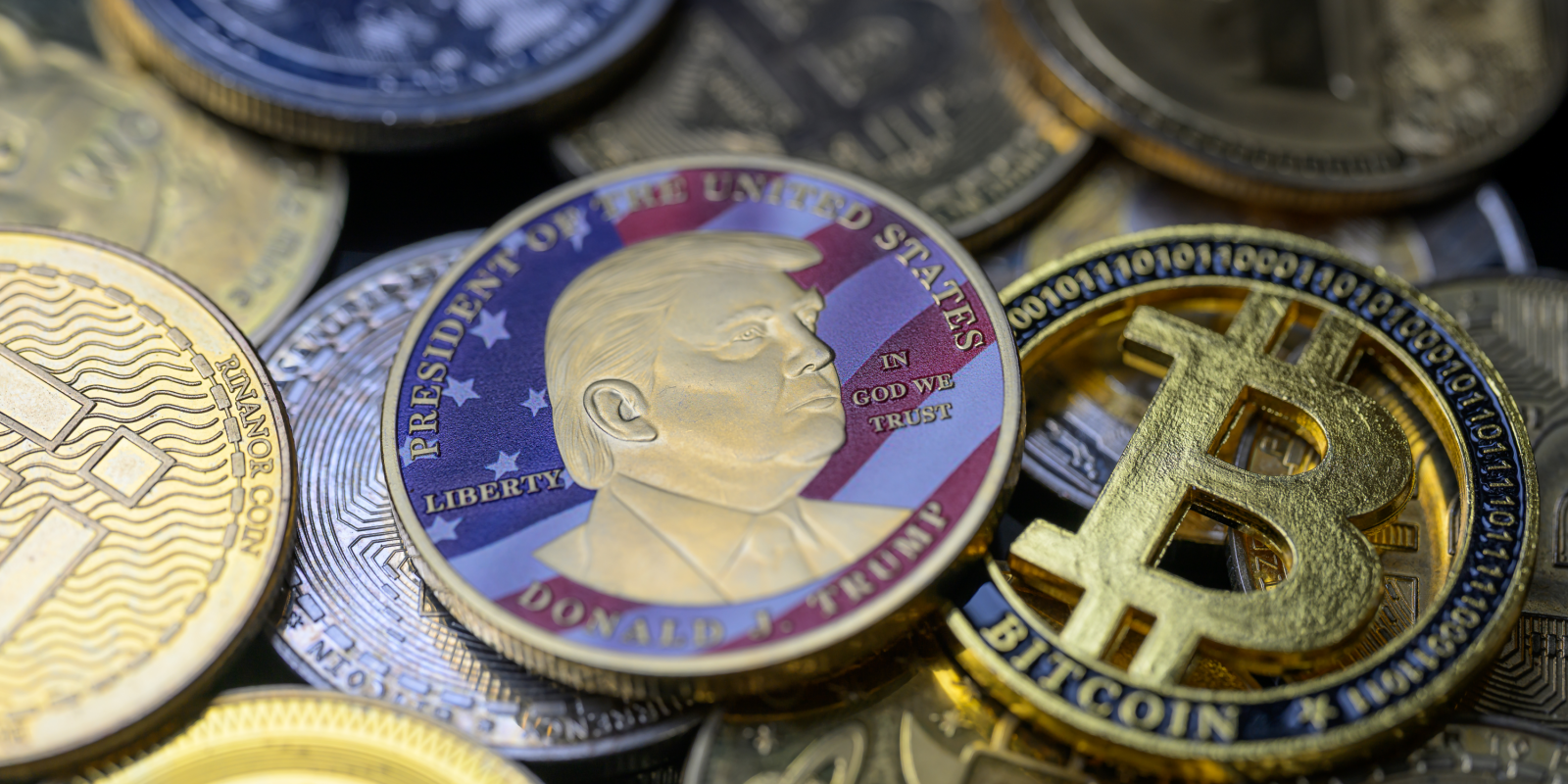

There’s a hard truth Europe must absorb: principles won’t buy influence in Washington anymore. Money will.
Nearly a year into the second Donald Trump presidency, Europe (the EU and its European neighbours) must quickly come to terms with the fact that the US worldview is hyper-transactional – one that sees alliances as ledger entries, and partners as paying customers.
The pattern is unmistakable: money buys access, and money buys influence. Those who arrive in Washington with investment pledges, financing packages or defence purchases are ushered in. Those who don’t simply wait outside.
When money trumps diplomacy
The record is long and unambiguous. During his first administration, Donald Trump loudly advertised US–Saudi defence and investment pledges worth ‘$110 billion’, a figure widely contested but aggressively marketed by the White House. He reversed his previously negative stance on Qatar, after Doha expanded its US investment portfolio with a $45 billion commitment. And he demanded that South Korea increase its host-nation support payments for US forces to an unprecedented $5 billion per year.
Since returning to office in 2025, the same logic has not merely persisted – it has intensified. The US president has courted Gulf sovereign wealth, praising investment from Saudi Arabia’s Public Investment Fund, the UAE’s Mubadala, and Qatar’s QIA in US tech and infrastructure. He has celebrated new commercial agreements from Kazakhstan and Uzbekistan, treating Central Asia as an investment marketplace for political attention. And the president routinely highlights big tech agreements like Apple’s $600-billion US investment plan and semiconductor megaprojects.
This is the environment Europe operates in. The bloc cannot rely on appeals to history, values or alliance loyalty if it wants to shape the outcome in Ukraine. It must bring money – serious money – into the room.
Why money works – especially on Trump
Donald Trump’s worldview has been consistent for decades. Alliances are assets that must be paid for. He has long framed NATO in accounting terms and dismissed European concerns if they were not backed by capital.
That means Europe needs tangible leverage. Not pledges. Not gradual runway plans. Real money now. Only a significant, up-front commitment will put Europe in the category Donald Trump respects: the serious payers.
The irony is that Europe is sitting on an economic base the US president routinely praises – the world’s second-largest economy – and yet fails to deploy it strategically. If the political will aligned in Europe, it could line up a massive €1 trillion on the table for Ukraine and deterrence without rewriting treaties. The components already exist.
5 weapons in Europe’s financial arsenal
Europe has numerous methods to bring about a €1 trillion package.
First there is the EU’s multiannual financial framework (MFF), which still contains untapped ceilings and guarantees. Targeted revisions – similar in approach to the 2023 top-up package – could rapidly unlock tens of billions (MFF Adjustments).
Second, there is joint borrowing. 2020’s NextGenerationEU (NGEU) stimulus package proved Europe can borrow at scale with market confidence. Indeed Mario Draghi, whose competitiveness report explicitly encouraged expanding such borrowing, argues that Europe’s collective credit rating is a ‘strategic asset’ that should be deployed for competitiveness, energy security and defence. NGEU currently has an issuance capacity of €806 billion to finance Europe’s economic recovery and long-term resilience in the aftermath of the COVID-19 pandemic. That now needs to be replicated for security.
The bloc has already taken a step towards a more security-minded Union with the ProtectEU strategy. But this lacks the scale and joint-borrowing architecture that made NextGenerationEU so powerful.
What Europe needs is a true ‘NextGenerationSecurity’ instrument: a joint-financing mechanism on the order of €300–400 billion, capable of underwriting defence-industrial capacity, long-term support to Ukraine and visible burden-sharing at a level even a transactional White House cannot ignore.
Third, there is national front loading and sovereign guarantees. Member states have already pledged to reach or exceed 2 per cent of GDP defence spending. Accelerating these increases, issuing national guarantees or contributing to a collective fund, could yield another €300 billion over the next few years. Germany’s ‘Sondervermögen’ shows how quickly such packages can materialize when the political moment hits.
The European Investment Bank (EIB)is another underused lever. one of the world’s largest public lenders, it has the capacity – through guarantees, blended finance and co-investment – to mobilize €100–150 billion for defence-adjacent industrial capacity, including munitions production, cyber capabilities, secure infrastructure and dual-use technologies.
Draghi’s review argued that Europe must redirect more public capital toward strategic sectors and accept a higher degree of calculated risk to rebuild industrial strength. The EIB is well placed to do exactly that – but only if it is given a stronger political mandate and member states loosen constraints on support for security-related projects.
Fifth, frozen Russian assets remain a significant force multiplier. In spite of a recent setback, Europe is moving ahead with using windfall profits from frozen Russian sovereign assets to support Ukraine. While politically sensitive, these funds add credibility to Europe’s financial posture and will signal seriousness to the US president.
What Europe gains from writing a big cheque
Put together, Europe can easily assemble commitments approaching a bold €1 trillion package. Draghi’s arguments provide the intellectual scaffolding and political cover to do so. Such a show of strength isn’t charity or a miscalculated political gamble – it is nothing less than a strategic insurance policy.